When someone thinks about alternatives to Windows, the first thing that comes to mind is Linux. However, there's a fascinating and very robust parallel universe called BSD (Berkeley Software Distribution) that deserves our full attention. We're not talking about a simple clone, but a direct descendant of UNIX, that legendary system from the 60s that essentially laid the foundations of modern computing , from the servers that keep the web alive to the devices we carry in our pockets.
What makes this group of systems truly special is not just its technical architecture, but its free software licensing philosophy . It's so open that it borders on the public domain, allowing both volunteer communities and corporate giants to adapt the code as they see fit without the stricter restrictions of other licenses. This flexibility is the reason why BSD is still alive and well in so many corners of current hardware, even if we don't always see it at first glance.
The origin: a legal war with technological fruits
To understand this mess, we have to go back to AT&T's Bell Labs. At that time, they allowed the University of California, Berkeley to use UNIX code for its research. Everything was going smoothly until AT&T decided that money talked and withdrew the permission , leading to a rather absurd legal battle. But the Berkeley academics didn't sit idly by and created their own version, giving birth to BSD.
This project not only survived the legal battle, but also left us with gems we now take for granted. The development of the TCP/IP protocol suite , which is essentially what allows the internet to function, the Fast FileSystem, and demand-paged virtual memory management all originated here. In short, much of the Windows networking and the macOS kernel draw directly from these advancements, highlighting the differences between Linux and UNIX.
The three pillars of the BSD ecosystem
Although there are dozens of variations, three projects carry the weight of the family. The first is FreeBSD , probably the most popular. Its focus is on high performance and ease of use, making it the preferred choice for web content providers , storage servers, and machines with x86 or 64-bit ARM architectures. It boasts a huge community of active developers and contributors.
Then we have NetBSD , whose mantra is extreme portability. Its motto, "of course it runs NetBSD," sums up its obsession with running on any device, from an old PDA to NASA space missions . Its pkgsrc package system is particularly noteworthy, an engineering marvel for managing software across vastly different platforms.
Finally, we found OpenBSD , where security and cryptography are paramount. The code is meticulously reviewed to ensure the system is secure by default , disabling any unnecessary services to close potential vulnerabilities. It's the ideal tool for building reliable firewalls or intrusion detection systems.
Modern derivatives and specializations
From these three giants, more specialized projects have emerged. For example, DragonFly BSD was born as a fork of FreeBSD with the idea of rewriting concurrency management and improving the kernel with its own file system called HAMMER . It is a very powerful option for high-performance transactional computing in server environments.
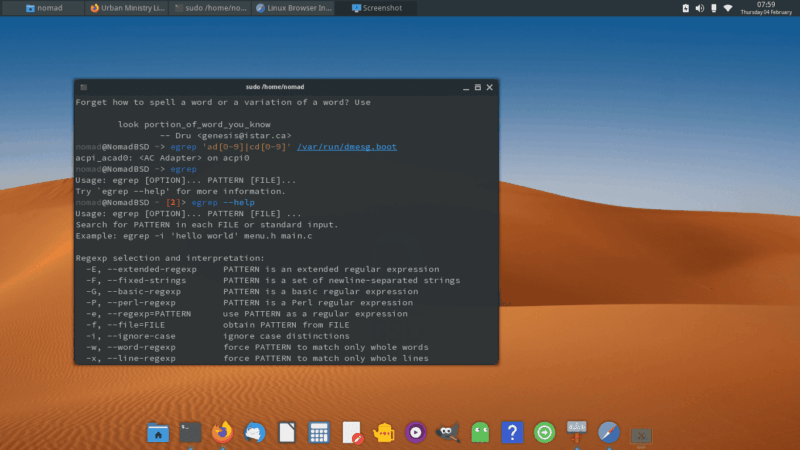
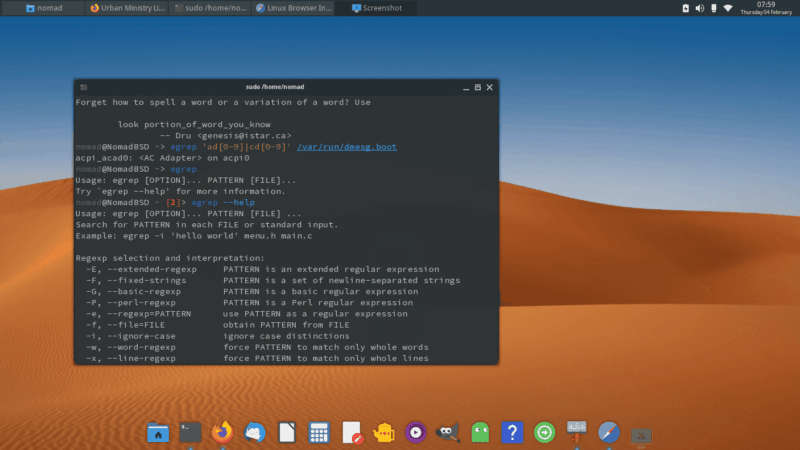
If you don't want to struggle with the console from the start, there are options like GhostBSD . This project aims to offer a "ready-to-use" desktop-oriented experience, integrating environments like MATE and simplifying installation for those coming from other systems. There's also NomadBSD , which lets you carry a portable UNIX system on a USB drive for system rescue and repair.
We can't forget MidnightBSD , which blends code from various branches to appeal to Linux users through environments like Xfce. In the networking field, pfSense and OPNsense stand out as extremely powerful firewalls based on FreeBSD and used by companies worldwide for their reliability.
Impact on the industry and the BSD License
It is essential to understand the difference between the GPL and the BSD License . While the former is "viral" and requires that derivative works remain free, the BSD License is permissive. This means that a company can take the code, modify it, and sell it as a closed product without having to reveal its secrets, as long as it maintains the original copyright notice.
This characteristic has led to Berkeley's DNA being found in unexpected places. Apple's Darwin kernel, the foundation of macOS and iOS , uses a vast amount of FreeBSD code. Similarly, consoles like the PlayStation 4, PlayStation 3 (with CellOS), and Nintendo Switch use variants of these systems to manage their internal processes.
There are even Linux distributions, such as Void Linux , that, while not using the BSD kernel, draw directly from its philosophy in package management and the simplicity of the boot system. Other examples, such as CRUX and Quimera Linux, have also adopted elements inspired by the BSD world to improve their efficiency.
Other variants and historical projects
Over the years, many other projects have existed. PC-BSD , for example, prioritized user-friendliness and ease of use, introducing .pbi files for one-click installations and tools like AppCafe for software management. Although it evolved into TrueOS , it set a precedent in the pursuit of usability within the BSD environment.
There are also highly specialized projects like HardenedBSD , focused on exploit mitigation, and helloSystem , which aims for simplicity and elegance for developers. On the NAS side, we have TrueNAS (formerly FreeNAS) and XigmaNAS , which leverage the power of ZFS for managing massive data storage.
The BSD family represents technical stability and precision engineering. From the extreme security of OpenBSD to the ubiquity of FreeBSD in the internet infrastructure, these systems demonstrate that the robustness of UNIX remains the fundamental basis upon which much of the technology that defines our digital age is built.